Let's talk about the number every online coach avoids looking at: churn rate.
Industry data shows that 60% of fitness clients quit within the first 90 days. That's not a motivation problem. That's a system problem.
Most coaches blame the client. "They weren't committed." "They didn't want it bad enough." But here's the uncomfortable truth: if 6 out of 10 clients quit, the problem isn't them. It's us.
The good news? The fix isn't complicated. It's check-ins. But not the half-hearted "how's it going?" kind. The kind that make progress feel real.
The 90-Day Churn Cliff
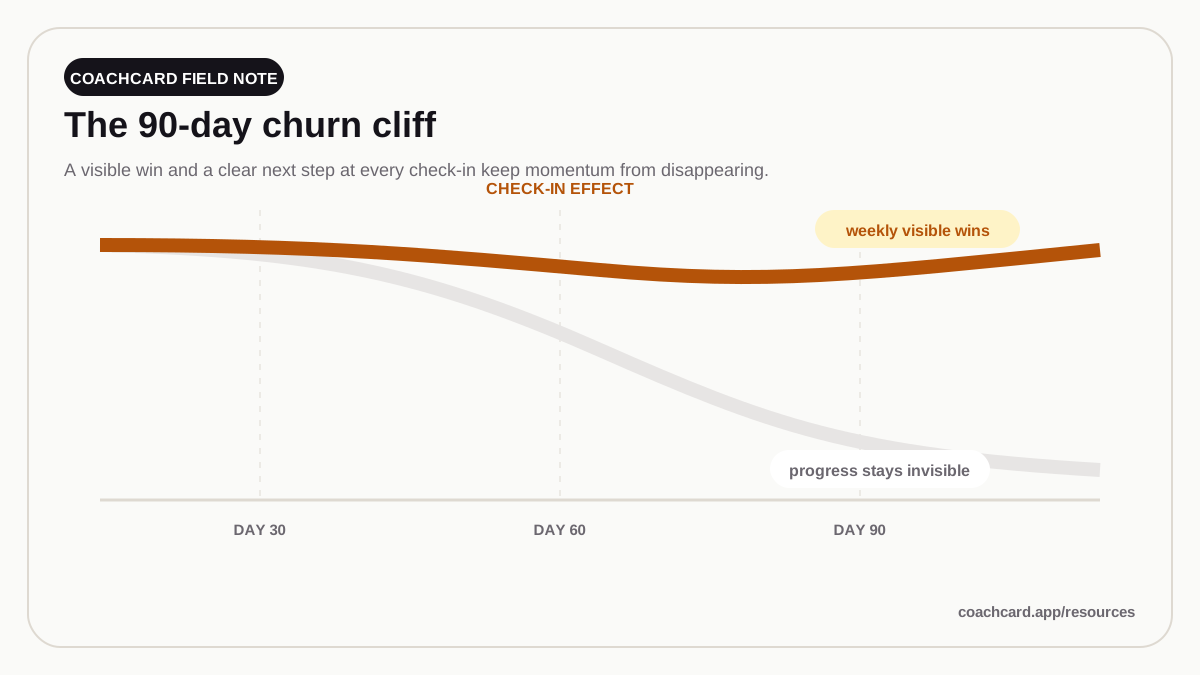
New clients come in fired up. First week? They're all in. Second week? Still crushing it. Third week? Momentum starts to fade.
By week 6-8, doubt creeps in. "Is this working?" "I don't feel different." "Maybe I'm not cut out for this."
By week 12, they're gone.
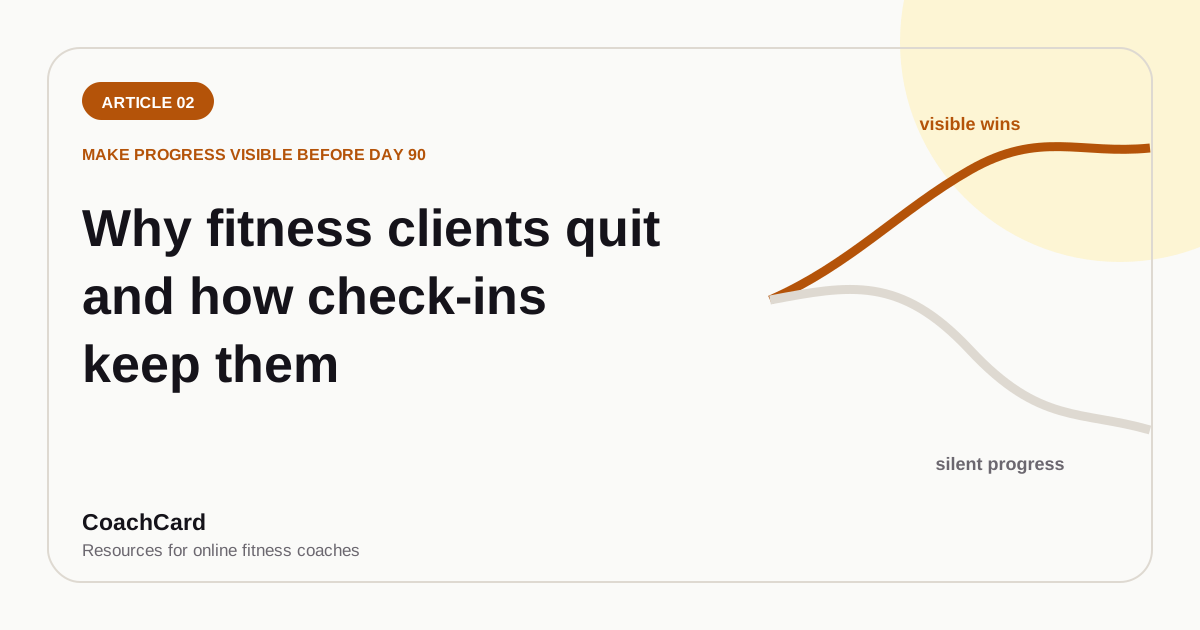
Here's what's happening: they're making progress, but they can't see it. Weight fluctuates daily. Energy feels random. The mirror lies. And without a system to show them the trend, they lose faith.
You know they're progressing — you can see it in the data. But they don't know it. And what they don't feel, they won't stick with.
The #1 Reason Clients Leave: They Don't Feel Their Progress
Ask coaches why clients quit and you'll hear:
- "Life got busy"
- "They lost motivation"
- "They weren't disciplined"
Ask clients why they quit and you'll hear:
- "I wasn't seeing results"
- "I didn't know if it was working"
- "I felt like I was just spinning my wheels"
Same situation, two different interpretations. The coach sees progress. The client doesn't feel it.
This is the retention gap. And it's fixable.
What Effective Check-Ins Actually Do
Weekly check-ins aren't just data collection. They're the feedback loop that keeps clients engaged. Here's what they do when done right:
1. Make Invisible Progress Visible
Weight went up this week because the client had a big dinner Saturday night? You can see that's just water retention. But they don't know that unless you tell them.
Strength went up even though weight stayed flat? That's progress. But they'll miss it if you don't point it out.
Good check-ins turn data into narrative. They show the client what's actually happening, not what the scale said on one random morning.
2. Create Accountability Anchors
Knowing you have to submit a check-in on Sunday keeps people honest during the week. It's a gentle nudge that says, "Your coach is watching, and you said you'd do this."
It's not about guilt. It's about showing up because you made a commitment — and someone's there to notice if you don't.
3. Build Emotional Wins from Data
Here's a real example from a coach I know:
Client submits check-in. Weight down 0.6 lbs. Measurements down 1 inch on the waist. Adherence: 5/5 workouts completed. Energy: 8/10.
Bad check-in response: "Great work, keep it up!"
Good check-in response: "You crushed this week. Five workouts completed, waist down a full inch, and your energy is climbing. That tells me your body is adapting perfectly. The scale will catch up — but look at that waist measurement. That's fat loss, not water. Keep doing exactly what you're doing."
One response is forgettable. The other is a dopamine hit. The second client feels successful. And that feeling is what keeps them showing up.
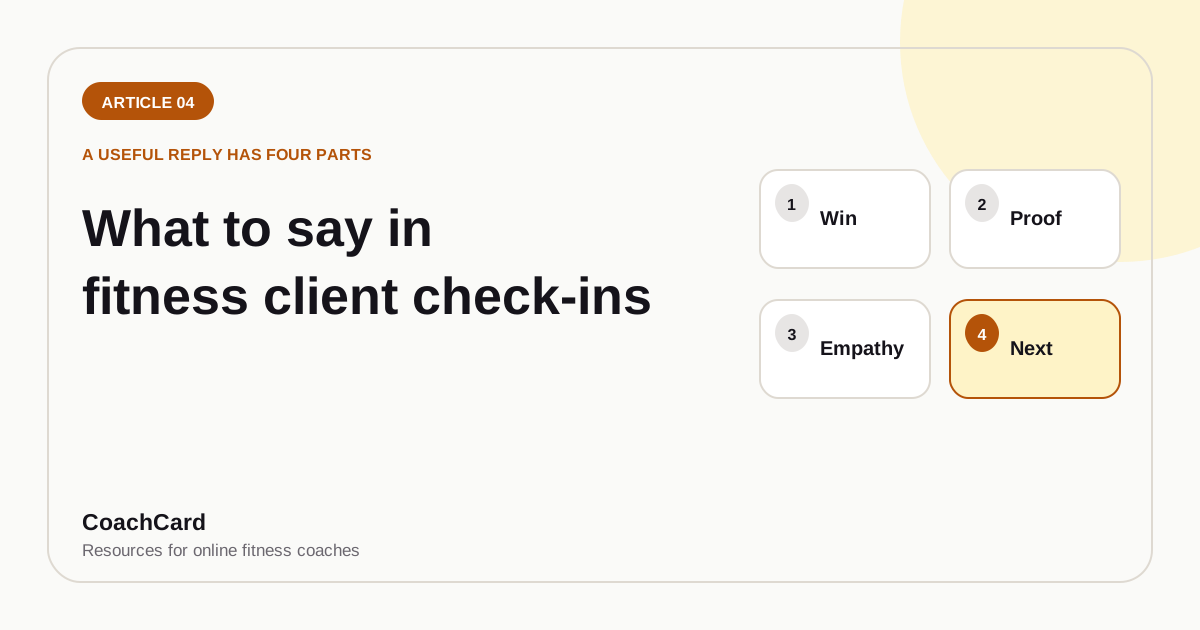
The Weekly Check-In Formula
If you want clients to stick around, here's the structure that works:
Step 1: Collect the right data
- Weight (weekly average, not one weigh-in)
- Key measurements (waist, hips, or whatever matters for their goal)
- Progress photo (every 2-4 weeks)
- Workout adherence (did they complete the sessions?)
- Subjective metrics (energy, hunger, mood — 1-10 scale)
Step 2: Identify the win
Every single week has a win. Even "bad" weeks. Find it.
- Weight up but adherence perfect? That's a behavior win.
- Weight flat but measurements down? That's body comp improving.
- Everything flat but energy climbing? That's recovery improving.
There is always a win. Your job is to see it and name it.
Step 3: Acknowledge the challenge (if there is one)
If they fell off, don't ignore it. Don't shame them either. Acknowledge it and move forward.
"You missed three workouts this week — I see you had a rough week at work. That happens. What's one thing we can do differently this week to make it easier to show up?"
Step 4: Set the focus for next week
Don't just say "keep going." Give them one clear focus for the coming week.
- "This week, let's aim for 4/5 workouts and keep protein above 140g."
- "This week, I want you to notice how your clothes fit. The scale is being stubborn, but I think you'll feel a difference."
One focus. Clear direction.
Step 5: Send them something tangible
This is the part most coaches skip — and it's the most powerful.
Don't just send a text message. Send them a progress report they can look at, save, and come back to when doubt creeps in.
A professional-looking card with their numbers, a chart showing the trend, and your personalized note. Something that feels official. Something they can screenshot and post to their Instagram story.
When clients share their progress reports, two things happen:
- They get public accountability and encouragement
- You get free marketing (every post is a testimonial)
Why Spreadsheets Kill Motivation
Let's be honest: no client is excited to see their progress in a Google Sheet.
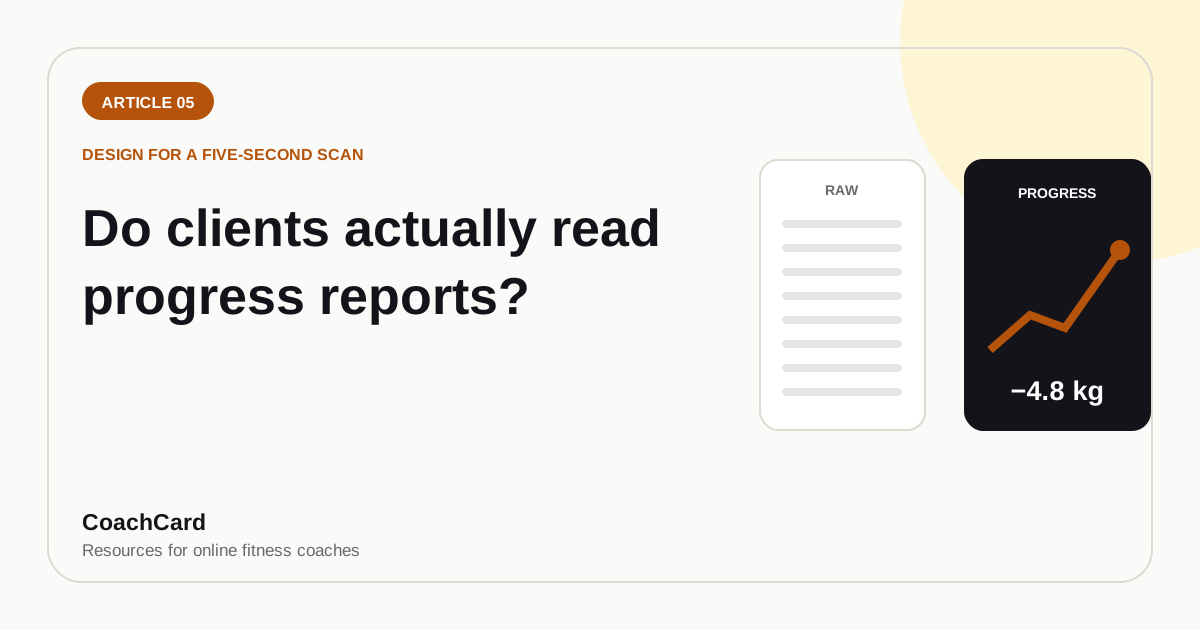
Raw data is cold. "Week 8: 152.4 lbs, waist 32.5, adherence 4/5" doesn't feel like progress. It feels like homework.
But a beautifully designed progress card with a trend chart, a big "Down 2.8 lbs this month!" headline, and your encouraging note? That feels like winning.
The format matters as much as the data. A spreadsheet is for you. A progress report is for them.
The Visual Progress Report Advantage
Here's what happens when you send clients a gorgeous progress report instead of a text message:
- They feel professional (this coach takes me seriously)
- They feel seen (someone actually reviewed my data and wrote this for me)
- They feel successful (look at this card, I'm crushing it)
- They share it (free social proof for you)
The coaches who retain clients at 80%+ aren't just doing check-ins. They're making every check-in feel like a milestone.
You don't need to be a designer. Tools like CoachCard turn your check-in data into a beautiful, personalized progress report in 60 seconds. Your client gets a card they'll actually save. You get your time back.
Keep Clients Longer with Progress Reports They'll Love
CoachCard makes every check-in feel like a win. Beautiful reports, done in 60 seconds.
The Bottom Line
Clients don't quit because they're unmotivated. They quit because they can't feel the progress you can see.
Your job isn't just to collect data. It's to translate data into emotion. To take the numbers and turn them into a story that keeps them going when the scale doesn't move and life gets hard.
Weekly check-ins are your retention tool. But only if you do them right. Make progress visible. Make it tangible. Make it something they can hold onto when doubt shows up.
That's how you keep clients past the 90-day cliff. That's how you build retention rates that let you actually scale.