Every online fitness coach hits the same wall. Around 30-40 clients, Monday mornings turn into chaos. Your inbox is overflowing with check-ins, you're juggling spreadsheets, and somehow you're spending more time on admin than actual coaching.
You got into this to help people transform their lives. Not to drown in data entry.
The good news? The scalability wall isn't about working harder. It's about building systems that let you work smarter. Here are 7 proven systems that let coaches manage 50+ clients without burning out — or hiring an assistant.
The Scalability Wall (And Why 30-50 Clients Is Where It Hits)
Most online coaches can handle up to about 25-30 clients with their "figure it out as you go" approach. Beyond that, the cracks start showing.
Here's why: if you spend just 10 minutes per client per week on check-ins, progress reviews, and updates, that's 5 hours at 30 clients. At 50 clients? That's over 8 hours just on check-ins. And that's before programming, form checks, or actual coaching conversations.
The math doesn't work. You can't scale linearly when your time investment per client stays the same. You need systems that scale logarithmically — where adding 10 more clients doesn't add 10x the work.
Time Audit: Where Coach Hours Actually Go
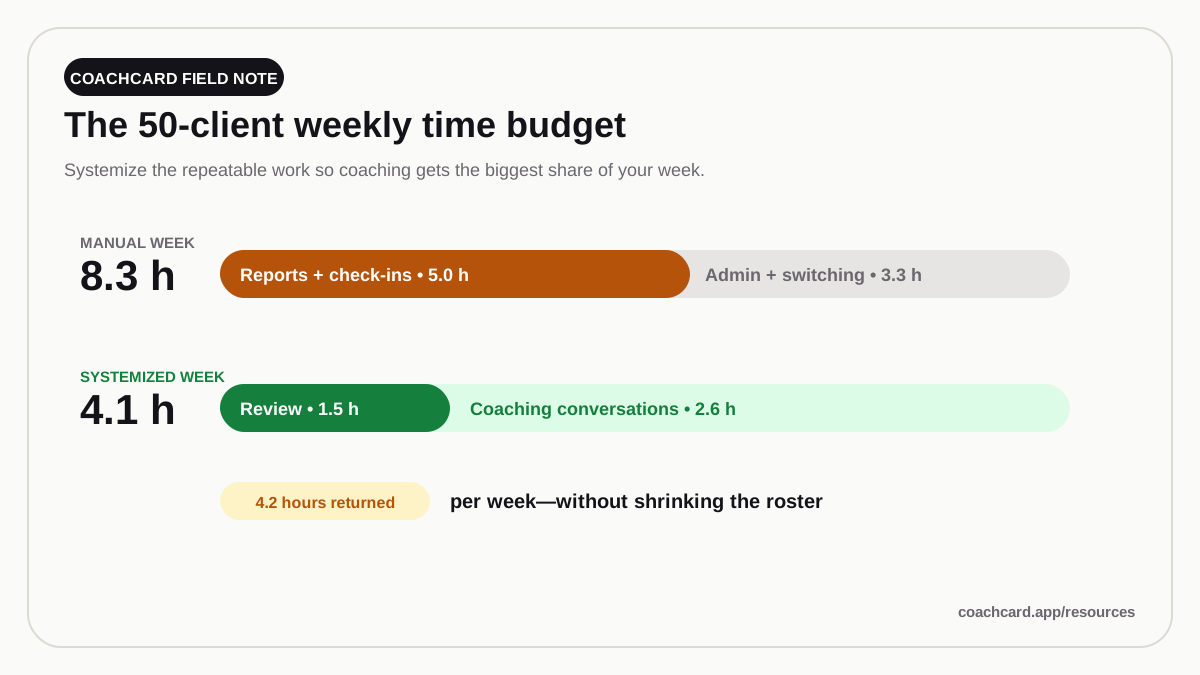
Before we fix it, let's be honest about where your time goes. Track yourself for one week and you'll see something like this:
- 40% — Client check-ins and progress reports
- 25% — Programming workouts
- 20% — Client communication (questions, encouragement, troubleshooting)
- 10% — Admin (billing, onboarding, scheduling)
- 5% — Marketing and sales
That 40% on check-ins? That's your biggest lever. Cut it in half and you've just freed up 4+ hours per week. That's time you can spend coaching, growing your business, or actually having a life.
7 Systems to Scale Without Hiring
1. Batch Your Check-In Reviews
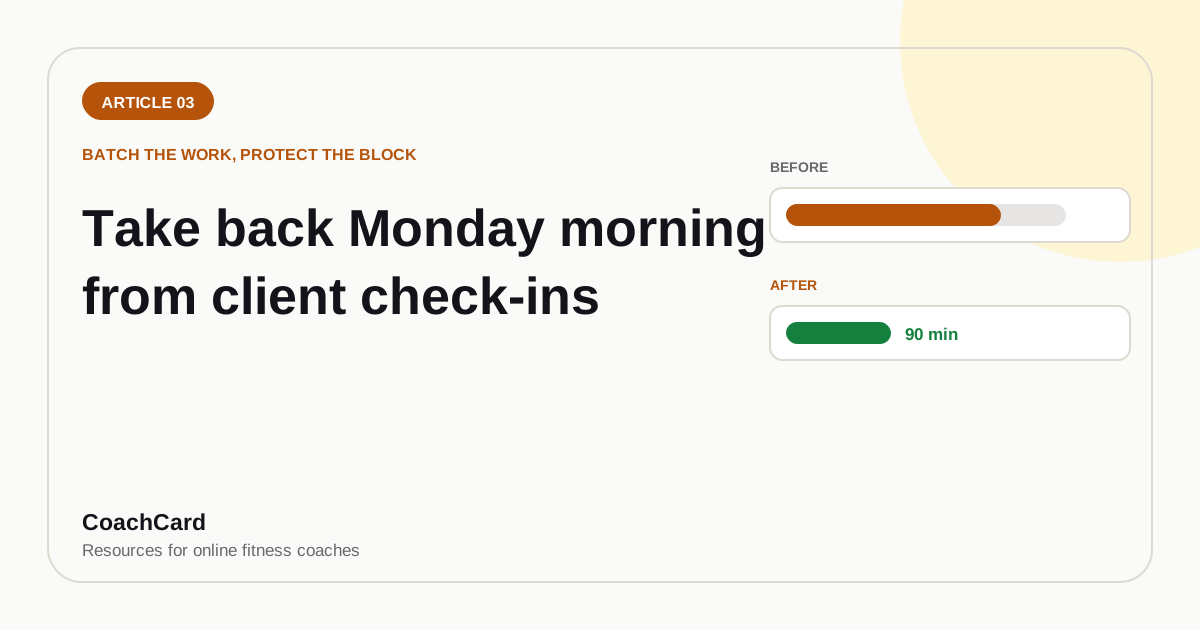
Stop reviewing check-ins one-by-one as they trickle in. Block Monday morning (or whatever day works for you) and do them all at once.
Why batching works:
- You're in "review mode" — context-switching kills efficiency
- You can spot patterns across clients faster
- You're not constantly breaking your focus throughout the week
How to do it: Set a client expectation that you review check-ins every Monday by noon. They submit by Sunday night. You block 9am-12pm Monday for reviews. Done.
2. Automate Progress Reports
This is where most coaches lose hours every week. Manually creating personalized progress reports for 30-50 clients is unsustainable.
The old way:
- Open each client's spreadsheet
- Calculate weight change, measurement deltas, adherence rate
- Write a personalized note
- Format it into something presentable
- Copy into email or WhatsApp
- Repeat 30+ times
Total time: 3-5 hours every Monday.
The better way: Use a tool like CoachCard that turns your check-in data into a beautiful, personalized progress report in 60 seconds. Your clients get a professional report they'll actually save and share — and you get hours back.
The report becomes both their progress tracker and your marketing asset. When clients post their progress cards on Instagram, you're getting free client acquisition. Win-win.
3. Template Your Programming
You don't need to write every workout from scratch. Build a library of proven program templates you can customize per client.
How to build it:
- Create 4-6 base programs (fat loss, muscle gain, strength, maintenance)
- Modularize them (you can swap upper body days, adjust volume, scale intensity)
- Store them in a system where you can duplicate and tweak in minutes
A client who needs a fat loss program with 4 days/week and a shoulder limitation? You're pulling the fat loss template, swapping one upper day for your shoulder-friendly version, and you're done in 10 minutes instead of 60.
4. Use Async Communication (And Set Boundaries)
You are not on-call 24/7. Set clear expectations about response times and use async communication tools.
Good boundaries sound like this:
- "I check messages twice per day: 10am and 4pm. You'll hear back within 24 hours."
- "For urgent form checks, tag me in the app. For everything else, send a message."
- "I don't respond on weekends unless it's an emergency."
Your clients will respect boundaries if you set them. And async beats hopping on calls for every little question. Record a 2-minute Loom video for a form check instead of scheduling a 30-minute call.
5. Standardize Your Onboarding
Every new client should go through the exact same onboarding sequence. Build it once, reuse it forever.
Your onboarding system should include:
- Welcome email with expectations, communication guidelines, and what's next
- Intake questionnaire (Google Form or Typeform)
- Welcome video explaining your coaching style and how to succeed
- First program delivered with instructions
- First check-in scheduled
Put it in an email sequence or checklist. New client signs up, onboarding runs automatically. You're not reinventing the wheel 50 times a year.
6. Track Metrics That Matter (And Ignore the Rest)
Stop tracking 15 data points per client. You don't need daily step counts, sleep scores, and macros broken down by meal.
The 6 metrics that actually matter:
- Weight (weekly average, not daily)
- Key measurements (waist, hips, chest — whatever's relevant to their goal)
- Progress photos (every 2-4 weeks)
- Workout adherence (did they complete the sessions?)
- Subjective energy/hunger (1-10 scale)
- Performance (are they getting stronger/faster/better?)
That's it. More data doesn't mean better coaching. It means more time sorting through noise.
7. Hire Support for Non-Coaching Tasks (When You're Ready)
Notice I said "when you're ready" — because you don't need this at 30 clients. But by 50-60, it makes sense to offload low-value tasks.
What to outsource first:
- Social media content scheduling
- Email inbox management (filtering, organizing, flagging urgent stuff)
- Basic form checks (hire a junior coach to do first-pass reviews)
What NOT to outsource: client relationships, program design, progress reviews. That's your value. Everything else is support.
The Retention Math: Why One Saved Client = $1,800/Year
Here's why these systems aren't just about saving time — they're about making money.
Let's say you charge $150/month. Average client lifetime is 12 months. That's $1,800 per client.
Now imagine one client quits because you were too slow responding to their check-in. Or they didn't feel their progress because you never sent them a proper report. That's $1,800 gone.
Systems don't just save time. They save clients.
Faster check-in reviews = clients feel seen. Beautiful progress reports = clients see their wins. Clear communication = clients feel supported. All of that adds up to better retention — which is how you actually scale revenue.
Want to Save Hours on Client Reports?
CoachCard turns check-in data into beautiful progress reports in 60 seconds. Your clients will love them, and you'll get your Mondays back.
→ Try CoachCard free — no card required
The Bottom Line
You don't need to cap your roster at 30 clients to avoid burnout. You need systems that scale.
Start with the biggest time-suck: progress reports. Automate those with a tool like CoachCard, and you've just freed up 3-5 hours every week. Use that time to implement the other six systems, and suddenly managing 50 clients feels easier than 30 used to.
The coaches who scale aren't working harder. They're working smarter. Build the systems now, and you'll thank yourself when you hit 60, 70, or 100 clients.