Online fitness coaching has gone from "side hustle for trainers" to a legitimate, scalable business model. Coaches are building six-figure incomes working from anywhere, with client rosters of 50-100+ people.
But most coaches who try to go online fail within the first year. Not because they're bad coaches — because they treat it like in-person training with a webcam. It's not.
This guide covers everything you need to build and scale a profitable online coaching business in 2026: from landing your first client to managing 50+ without burning out.
Table of Contents
- Getting Started — Niche, Pricing, First Client
- Systems Setup — Workflow, Tools, Communication
- Client Onboarding — First Impressions Matter
- Check-Ins & Accountability
- Progress Tracking — What to Measure
- Client Retention — The 90-Day Strategy
- Scaling to 30+ Clients
- Tools & Software — What You Actually Need
- Pricing & Packages
- Marketing — How to Get Clients
Getting Started
Choosing Your Niche
"Online fitness coach" is not a niche. It's a category. You need to go narrower.
Why niche down?
- Easier to market (you're solving a specific problem for specific people)
- Higher perceived value (specialist > generalist)
- Better client results (you get really good at solving one problem)
Good niches for 2026:
- Busy moms getting back in shape post-pregnancy
- Desk workers training for strength without a gym
- Runners training for their first marathon
- Women 40+ focused on muscle and bone density
- Remote workers who travel frequently
How to pick: Start with who you've gotten the best results for. That's your niche. You can expand later.
Your First Client
Don't overthink this. Your first client is probably someone you already know.
Where to find client #1:
- Post on your personal social media: "I'm launching online coaching. Looking for 3 people to work with at a discounted rate while I dial in my systems. DM if interested."
- Reach out to 10 people in your network who've expressed interest in fitness
- Offer a free 2-week trial in exchange for a testimonial and before/after photos
Pricing for client #1: $50-100/month. Yes, that's low. You're buying testimonials and case studies. After 3-5 clients, raise your rate.
Systems Setup
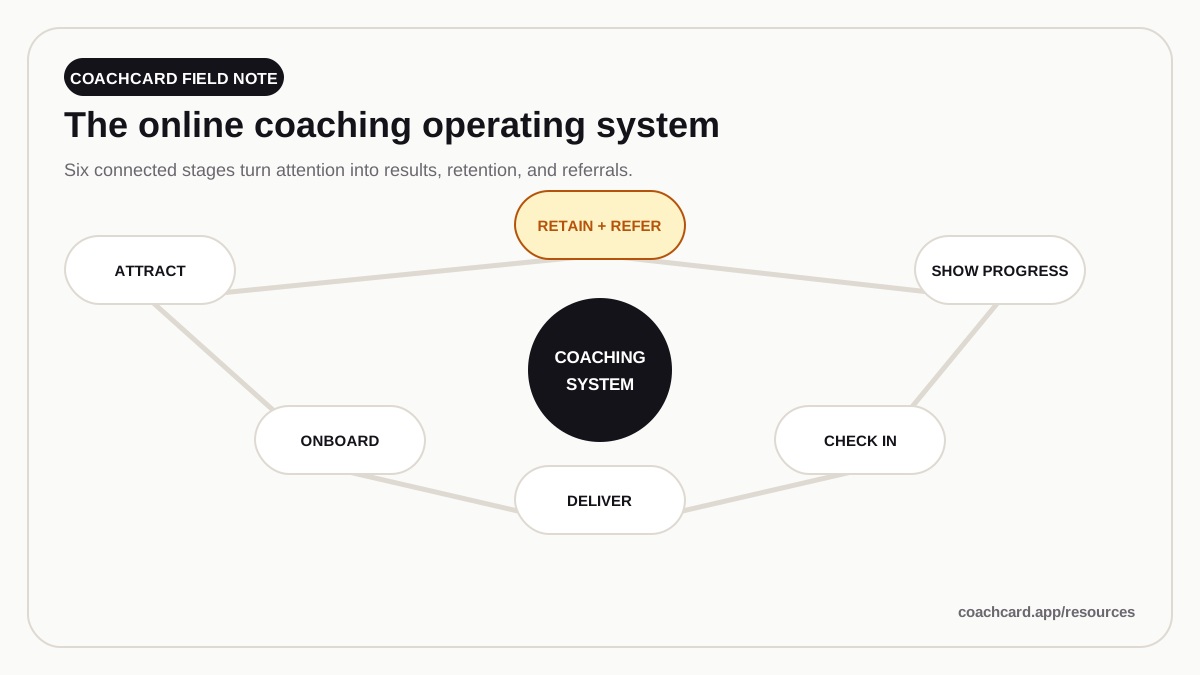
This is where most coaches fail. They wing it for the first 10 clients, then hit a wall at 20-30 when the chaos becomes unsustainable.
Set up systems before you need them.
The Core Workflow
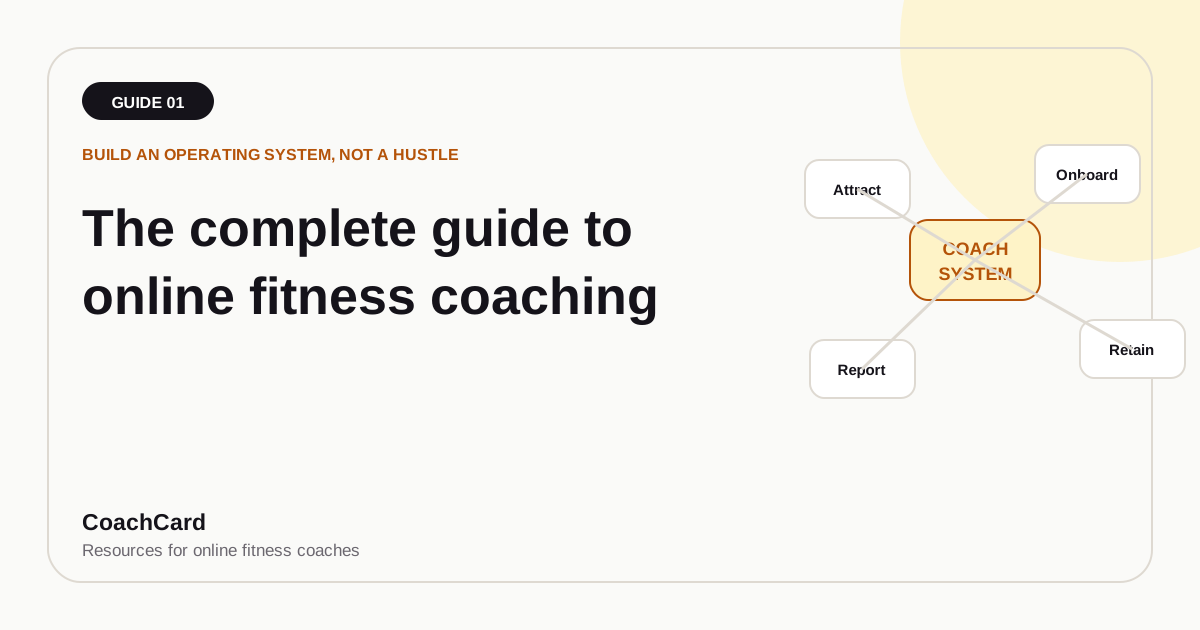
Every online coaching business has the same basic workflow:
- Client signs up → Payment processed, welcome email sent
- Onboarding → Intake form, goal-setting, first program delivered
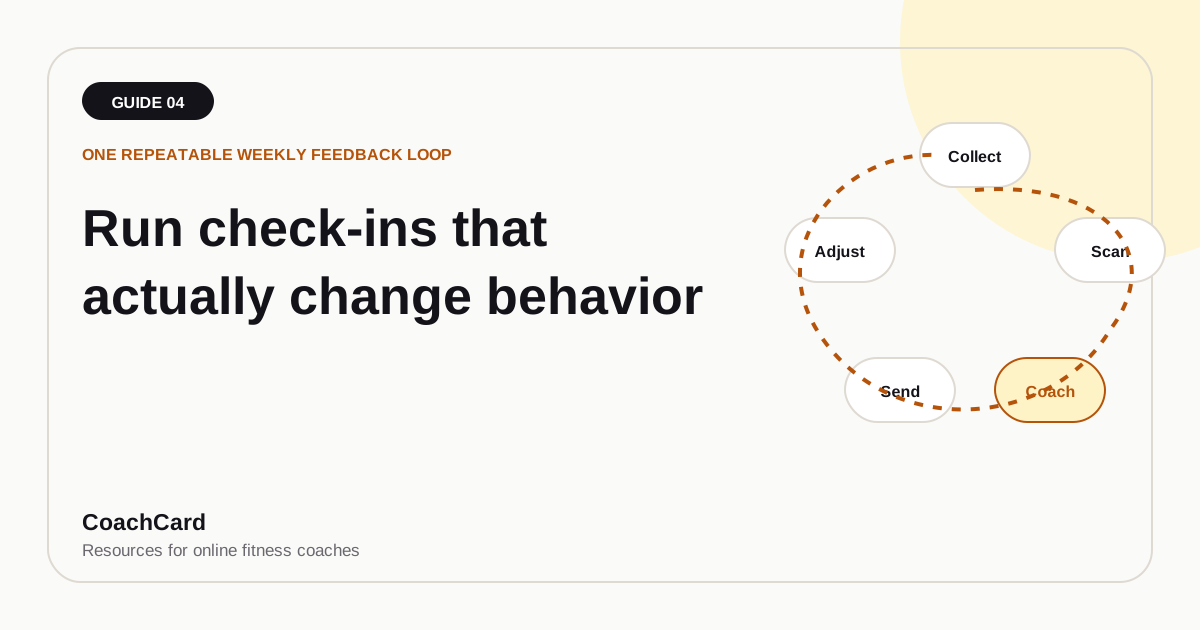
- Weekly check-ins → Client submits data, you review and respond
- Programming → Adjust workouts based on progress and feedback
- Communication → Ongoing questions, form checks, support
- Monthly/quarterly reviews → Deep dive on progress, adjust the plan
Each step needs a system. If you're doing any of these manually or inconsistently, that's where you'll break when you scale.
Communication Stack
You need clear communication channels. Don't mix everything into DMs.
Recommended structure:
- Email: Onboarding, monthly invoices, official updates
- Coaching app or WhatsApp: Day-to-day communication, form checks, quick questions
- Weekly check-ins: Submitted via form (Google Forms, Typeform, or dedicated app)
- Calls (optional): Monthly or quarterly, not weekly (doesn't scale)
Set boundaries from day one:
- Response time: "I check messages twice per day, 10am and 4pm. You'll hear back within 24 hours."
- No weekends unless emergency
- Urgent = injury or safety concern, not "can I swap Tuesday's workout?"
Program Delivery
How do you get workouts to clients? Options:
1. PDF sent via email (simple, doesn't scale well)
2. Google Sheets (works for data tracking, clunky for workout instructions)
3. Coaching app (Trainerize, TrueCoach, My PT Hub — built for this)
4. Custom app (expensive, only worth it if you're 100+ clients)
For most coaches starting out: use a coaching app. They handle workout delivery, exercise videos, and progress tracking in one place.
Client Onboarding
First impressions set retention. A messy onboarding = high churn in month 1-2.
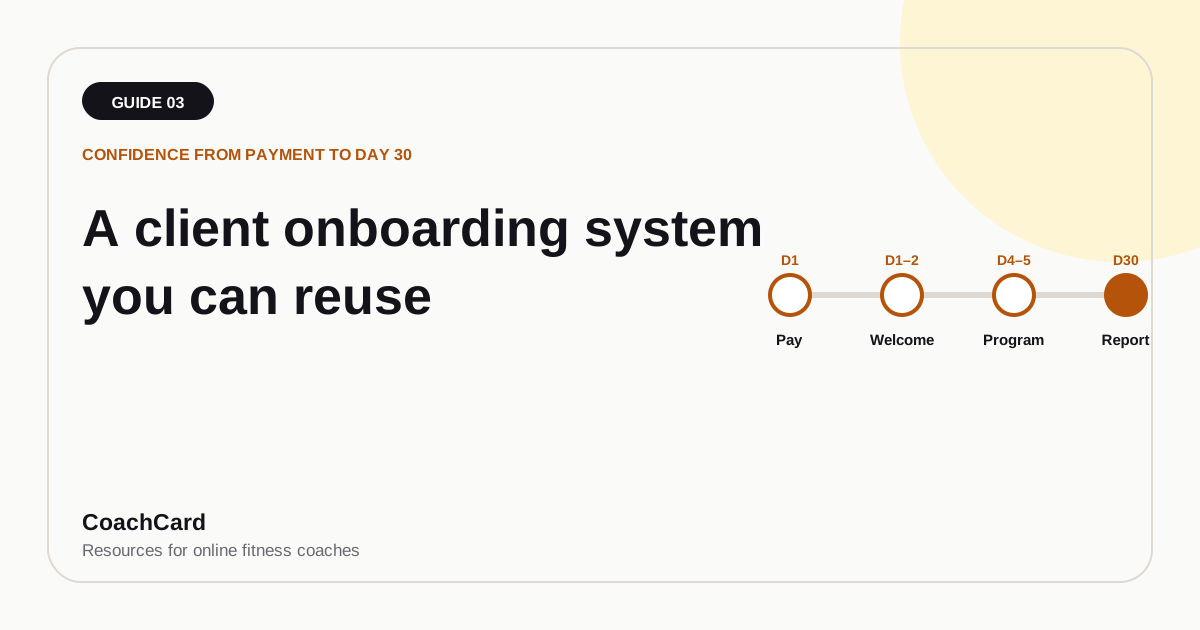
Week 1: The Welcome Sequence
Day 1 (payment confirmed):
- Welcome email: "What to expect in your first week"
- Onboarding questionnaire link (health history, goals, experience level, schedule)
- Access to your coaching platform
Day 2-3:
- Review their questionnaire
- Send personalized welcome video (2-3 min, introduce yourself, outline the plan)
Day 4-5:
- First program delivered with instructions: "Here's your first week. Start Monday. Instructions inside."
Day 7:
- Check-in: "How's the first week going? Any questions?"
The Onboarding Questionnaire
This is critical. You need:
- Health history: Injuries, medications, conditions
- Goals: Specific (not "get fit" — dig deeper)
- Experience level: Have they trained before? What worked/didn't work?
- Schedule: How many days can they realistically train?
- Equipment: Home gym? Commercial gym? Nothing?
- Nutrition: Are they tracking? Willing to track? Dietary restrictions?
Use a Google Form or Typeform. Store responses in a spreadsheet. This becomes your client database.
Setting Expectations
Most client issues come from mismatched expectations. Set them early.
What they should expect from you:
- Weekly check-in reviews within 24 hours
- Program adjustments based on progress and feedback
- Response to questions within 24 hours (not instant)
- Monthly deep-dive review
What you expect from them:
- Weekly check-ins submitted on time (set a day: Sunday by 9pm)
- Follow the program (if they skip workouts, tell you why)
- Communicate when life gets chaotic (don't ghost)
Put this in writing. Send it in the welcome email.
Check-Ins & Accountability
Check-ins are the retention lever. Weekly check-ins = weekly touchpoints = relationship maintenance.
Frequency: Weekly vs Monthly
Weekly check-ins (recommended for 80% of clients):
- Keeps engagement high
- Lets you catch issues early
- Builds the habit of reporting
Bi-weekly or monthly (only for very experienced, self-sufficient clients):
- Less hand-holding required
- Works for maintenance or "just need programming" clients
For most clients, especially in the first 3-6 months: weekly.
What to Track
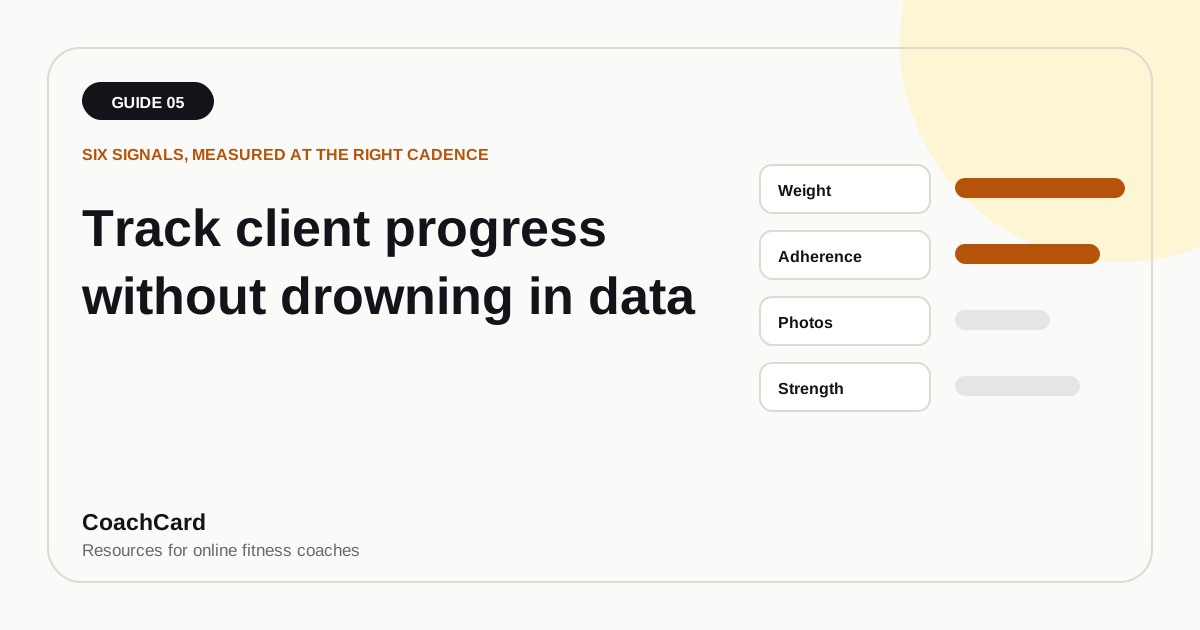
Don't over-complicate it. Track these 6 things:
- Weight (weekly average if possible)
- Key measurements (waist, hips, chest — depends on goal)
- Progress photos (every 2-4 weeks)
- Workout adherence (did they complete the sessions?)
- Subjective metrics (energy 1-10, hunger 1-10, any notes)
- Performance (are lifts going up? Cardio improving?)
That's it. More data ≠ better coaching. It means more time analyzing noise.
The Check-In Form
Use a consistent structure. Google Form or Typeform works great.
Sample questions:
- Weight (or weight average this week)
- Waist measurement
- Hip measurement
- Workouts completed (e.g., "4 out of 5")
- Energy level this week (1-10)
- Hunger level this week (1-10)
- Any notes or challenges this week? (open text)
Submit link via your coaching app or WhatsApp every Sunday at 6pm: "Check-in reminder — submit by 9pm tonight."
Progress Tracking
Progress tracking is both a coaching tool and a retention tool. Clients who see progress stick around. Clients who don't, quit.
Why Tracking Matters
Humans are terrible at noticing gradual change. Your client doesn't wake up one day and realize they lost 10 lbs. The scale fluctuates daily. The mirror lies.
Your job: Make invisible progress visible.
That means taking the raw data (weight, measurements, adherence, performance) and turning it into a narrative: "You're down 2.4 lbs this month, waist is down 1.2 inches, and strength is up 10%. This is working."
What NOT to Track
Don't track everything just because you can. Common traps:
- Daily weight: Weekly average is better (less noise)
- Every meal: Macro targets + adherence % is enough
- Sleep score from wearable: Unless they have a sleep disorder, subjective "how'd you sleep?" is fine
- 10,000 steps per day: Arbitrary. Track activity however they prefer.
More data = more time processing it. Track what moves the needle.
Showing Progress to Clients
This is where most coaches drop the ball. You see the progress. The client doesn't.
Bad: "Weight's down 0.8 this week. Keep going."
Good: Send them a progress report. A visual card with:
- Their key numbers (weight, measurements, adherence)
- A trend chart (last 4-8 weeks)
- Your personalized note
The format matters. A text message is forgettable. A professional progress card they can save and share? That's a retention tool.
Tools like CoachCard automate this. Input the data, generate the card, send. Takes 60 seconds per client.
Client Retention
Retention is how you scale revenue. A 10% improvement in retention = 2x revenue over 3 years.
The 90-Day Cliff
Most clients who quit do it in the first 90 days. Why?
- Weeks 1-4: Honeymoon phase. Motivation is high.
- Weeks 5-8: Novelty wears off. Doubt creeps in. "Is this working?"
- Weeks 9-12: Decision point. If they don't feel progress, they quit.
Your job: Get them past week 12. If they make it to month 4, retention jumps to 70-80%.
The First 90 Days: Week-by-Week Retention Plan
Weeks 1-4: Build the habit
- Focus on adherence, not results
- Celebrate showing up ("5/5 workouts completed — that's consistency")
- Set micro-goals (complete this week, submit check-in on time)
Weeks 5-8: Make progress visible
- By week 6, data should show trends
- Send progress reports highlighting wins (even small ones)
- Reframe plateaus ("Your body is adjusting — this is normal")
Weeks 9-12: Deep dive review
- Month 3 check-in: "Let's look at the big picture"
- Show before/after photos side-by-side
- Celebrate the progress they've made
- Set next 90-day goal
Why Clients Actually Quit (And How to Prevent It)
Reason 1: They don't see results
- Fix: Make progress visible weekly. Use progress reports, not just text updates.
Reason 2: They feel ignored
- Fix: Respond within 24 hours. Weekly check-ins keep communication consistent.
Reason 3: Life gets chaotic
- Fix: Adapt the plan. "Can't train 5 days? Let's do 3." Flexibility beats rigidity.
Reason 4: They plateau
- Fix: Reframe plateaus as part of the process. Adjust the plan. Find non-scale wins.
Reason 5: They don't feel connected
- Fix: Personalize your communication. Use their name. Reference their life. Show you remember them.
Scaling to 30+ Clients
At 20-30 clients, you hit the scalability wall. Here's how to break through:
Batch Your Work
Stop doing one-off tasks throughout the week. Batch them.
Monday 9am-12pm: Review all check-ins
Tuesday morning: Program all clients for the week
Wednesday afternoon: Respond to accumulated questions
Thursday: Form checks and video reviews
Friday: Admin (billing, onboarding new clients)
Batching keeps you in the same mental mode, which is way faster than context-switching 30 times a day.
Automate What You Can
You're a coach, not a data processor. Automate:
- Billing: Stripe or coaching app handles recurring payments
- Reminders: Automated "check-in due tonight" messages
- Onboarding emails: Email sequence sends welcome emails automatically
- Progress reports: Tools like CoachCard generate reports from check-in data in 60 seconds
Your time should go to coaching, not copy-pasting into emails.
Template Your Programming
You don't write every workout from scratch. Build a library:
- 4-6 base programs (fat loss, muscle gain, strength, maintenance)
- Modular (swap upper days, adjust volume, scale intensity)
- Stored in your coaching app for easy duplication
New client needs fat loss, 4 days/week? Pull the template, tweak for their equipment, done in 10 minutes.
Set Boundaries
You are not on-call. Set office hours:
- "I respond to messages between 10am-6pm, Monday-Friday"
- "Check-ins reviewed every Monday by noon"
- "No weekend communication unless emergency (injury/safety)"
Your clients will respect boundaries if you set them clearly.
Tools & Software
Here's the realistic tech stack for an online coach:
Coaching Platform (Choose One)
These handle workout delivery, client communication, and progress tracking:
- Trainerize ($5-45/month depending on client count) — Most popular, solid features
- TrueCoach ($20-100/month) — Great for strength-focused coaching
- My PT Hub ($20-150/month) — All-in-one, includes nutrition tracking
Alternative: Google Sheets + WhatsApp (free, but clunky at scale)
Progress Reporting
Your coaching platform shows you the data. But the client needs a beautiful, shareable report.
CoachCard ($19-39/month) — Turns check-in data into professional progress cards in 60 seconds. Clients love them, and they're shareable (free marketing when they post on Instagram).
Payment Processing
- Stripe (2.9% + $0.30 per transaction) — Industry standard, handles subscriptions
- Integration with your coaching platform (if it supports billing)
Communication
- Email: Gmail or whatever you already use
- Messaging: WhatsApp, Telegram, or built into your coaching platform
- Calls (optional): Zoom for monthly check-ins or onboarding calls
Forms & Data Collection
- Google Forms (free) — Client onboarding, check-in forms
- Typeform ($25-70/month) — Prettier forms, better UX
CRM (Client Relationship Management)
- Spreadsheet (free) — Works until ~30 clients
- Notion (free-$10/month) — Great for organizing client info + notes
- Airtable (free-$20/month) — Database + spreadsheet hybrid
Pricing & Packages
Pricing is one of the hardest decisions. Here's what works in 2026:
Market Rates
- $100-150/month: Entry-level online coaching (programming + weekly check-ins)
- $150-250/month: Mid-tier (programming, check-ins, form checks, more communication)
- $250-500/month: Premium (high-touch, frequent communication, calls, nutrition coaching)
Starting out? Charge $100-150/month. Raise rates after 10-15 clients and testimonials.
Package Structure
Basic Package ($100-150/month):
- Custom workout program (updated monthly)
- Weekly check-in reviews
- Messaging support (24-hour response time)
Premium Package ($200-300/month):
- Everything in Basic
- Bi-weekly or monthly coaching calls
- Nutrition guidance (macros, meal planning)
- Form checks on all lifts
Don't offer: Unlimited packages. "Unlimited messaging" attracts high-maintenance clients who will burn you out.
Monthly vs Quarterly vs Annual
Monthly: Easiest to sell, but highest churn
Quarterly (3 months): 10% discount, better for retention
Annual (12 months): 20% discount, locks in revenue
Start with monthly. Offer quarterly after 3 months. Offer annual to clients who've been with you 6+ months.
Marketing
You can be the best coach in the world. If no one knows you exist, you'll have zero clients.
Instagram (Primary Channel for Fitness Coaches)
90% of online fitness coaches get clients from Instagram. Here's how:
Content pillars:
- Educational: Tips, how-tos, debunking myths
- Transformation posts: Client results (with permission)
- Behind-the-scenes: Your process, your life, your story
- Engagement: Polls, Q&A, "reply with your goal" posts
Posting cadence: 4-5 posts/week + daily stories
Reels are king: Short, value-driven videos (15-60 seconds) get 10x the reach of static posts.
Outreach (First 10-20 Clients)
Cold Instagram DMs work — but you need a strategy.
Don't: "Hey, I'm a coach, want to work together?"
Do: Engage first (comment on their posts for a week), then DM with value: "Saw your post about struggling with consistency — I actually made a free guide on that. Want me to send it?"
Start a conversation. Build rapport. Then pitch.
Conversion rate: Expect 0.1-0.5% of cold DMs to convert to paying clients. That means 200-1,000 DMs to land one client. It's a grind. But it works when you're starting.
Referrals (After 10+ Clients)
Once you have happy clients, ask for referrals.
"If you know anyone looking for a coach, I'd love to work with them. Send them my way and I'll give you 50% off next month."
Referrals convert at 30-50%. Way better than cold outreach.
Content + Consistency
The coaches who succeed long-term are the ones who show up every day. Post value. Be visible. Build trust.
It takes 6-12 months of consistent content to build momentum. Most coaches quit before they hit it.
The Bottom Line
Online fitness coaching is one of the best business models in 2026. Low overhead. High margins. Location-independent. Scalable.
But it's not passive income. And it's not just "post workouts on Instagram." It's a real business that requires systems, boundaries, and consistency.
Start small: 5-10 clients while you dial in your systems.
Scale smart: Build the infrastructure (onboarding, check-ins, communication) before you need it.
Retain ruthlessly: A 10% retention boost = 2x revenue.
The coaches who succeed aren't the best trainers. They're the best operators. They build systems that scale. They make clients feel seen. They show up consistently.
If you can do those three things, you can build a six-figure online coaching business in the next 12-24 months.
Ready to Automate Your Progress Reports?
CoachCard turns check-in data into beautiful reports in 60 seconds. Save hours every week and give clients something they'll actually save and share.