Progress tracking is the difference between a client who sticks around for 12 months and one who quits at month 3.
Not because you track it — but because they see it. Humans are terrible at noticing gradual change. Your job is to make invisible progress visible.
This guide covers what to track, what to ignore, how to analyze it, and how to show it to clients in a way that drives retention.
Why Tracking Matters
Behavior change science is clear: feedback loops drive behavior.
Without feedback, clients guess. "Am I making progress? I think so? Maybe?" Doubt creeps in. Motivation fades. They quit.
With feedback, clients know. "I'm down 2.8 lbs this month and waist is down 1.2 inches. This is working." Confidence builds. Commitment strengthens. They stay.
Progress tracking creates that feedback loop. But only if you do it right.
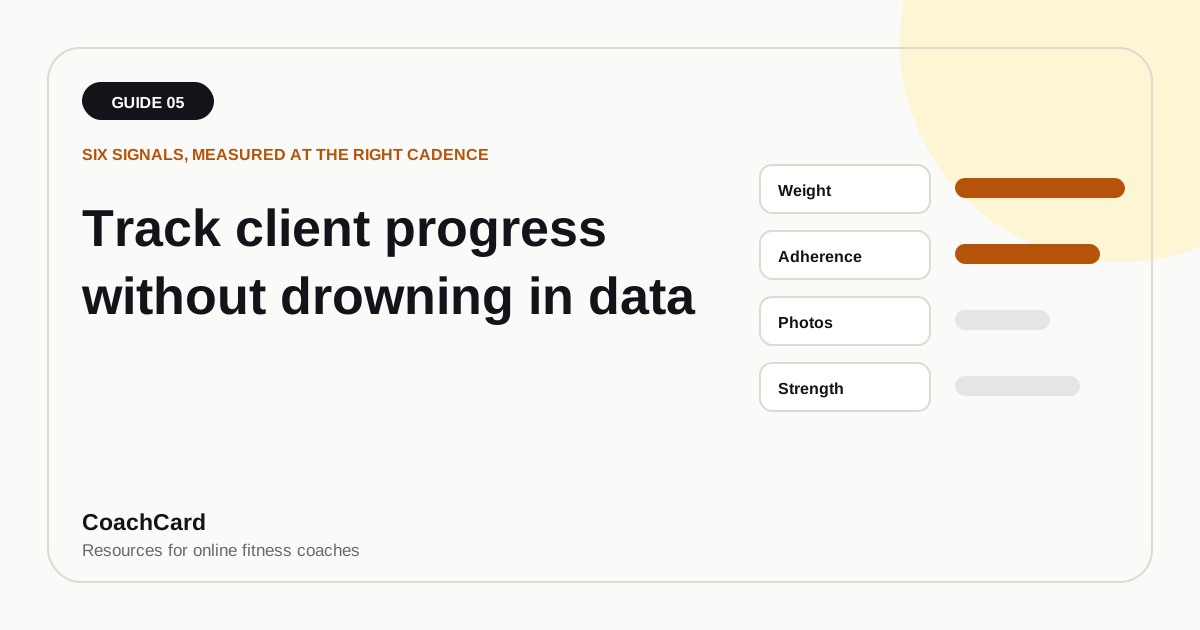
What to Track: The 6 Essential Metrics
Don't track everything just because you can. Track what moves the needle.
1. Body Weight
How to measure: Weekly average (7 daily weigh-ins, calculate average)
Why average? Daily weight fluctuates 2-4 lbs from water, sodium, hormones, digestion
Frequency: Weekly
Interpretation:
- Down consistently = fat loss (assuming adherence is solid)
- Up consistently = muscle gain (if that's the goal) or calorie surplus
- Flat = plateau (reassess after 3-4 weeks)
Common mistake: Reacting to one weigh-in. Weight on Tuesday doesn't matter. The 4-week trend does.
2. Body Measurements
What to measure: Waist, hips, chest, arms, thighs (pick 3-5 based on goal)
How to measure: Same spots, same time of day, relaxed (not flexed)
Frequency: Every 2-4 weeks (weekly is too noisy)
Why this matters: Body composition can change even when weight doesn't. Waist down + weight flat = fat loss + muscle gain happening simultaneously.
Pro tip: Waist measurement is the single best proxy for fat loss. If waist is trending down, fat is being lost.
3. Progress Photos
What to capture: Front, side, back (same lighting, same time of day, same location)
Frequency: Every 2-4 weeks
Why photos > scale: Visual proof is the most powerful motivator
How to take good progress photos:
- Morning, before food (consistent state)
- Natural lighting or consistent artificial light
- Same background
- Same clothing (underwear or fitted clothes)
- Relaxed posture (not flexed, not slouched)
Side-by-side comparisons: At 8-12 weeks, put before/after photos side-by-side. This is retention gold.
4. Workout Adherence
What to track: Workouts completed / workouts assigned (e.g., "4/5 sessions")
Frequency: Weekly
Why this is your #1 behavioral metric:
- Perfect adherence + no results = time to adjust the plan
- Poor adherence + no results = behavior problem, not program problem
Ideal adherence: 80-90%. Clients who hit 100% every week for months are either undertraining or about to burn out.
5. Performance Metrics
Strength training: Weight lifted, reps completed, sets completed
Cardio: Run times, distance, resistance levels, heart rate
Bodyweight: Push-ups, pull-ups, plank duration
Why this matters: Performance often improves before body weight changes. Strength gains = muscle being built = fat loss happening even if scale is flat.
How to track: Log every workout. Compare month-over-month.
6. Subjective Metrics
These are self-reported, but useful:
Energy (1-10 scale):
- Consistently low + perfect adherence = overtraining or under-recovery
- Climbing energy = body adapting well
Hunger (1-10 scale):
- Consistently high = calories too low or protein too low
- No hunger = calories might be too high
Mood, sleep quality, stress (optional):
- Track if client has issues in these areas
- Otherwise, skip (too much data to process)
What NOT to Track
Common traps coaches fall into:
❌ Daily weight (weekly average is better)
Daily fluctuations are noise. Weekly average is signal.
❌ Every meal (macro targets + adherence % is enough)
Tracking every meal in detail is exhausting for clients and you. Track totals.
❌ 10,000 steps per day (arbitrary goal)
Some clients hit 15k naturally. Some hit 5k. Track activity however they prefer.
❌ Sleep score from wearable (unless there's a sleep issue)
Nice to have, not need to have. Subjective "how'd you sleep?" is fine.
❌ Body fat % (unless using DEXA)
Calipers and bioimpedance scales are wildly inaccurate. Waist measurement is a better proxy.
Rule of thumb: If tracking it doesn't change what you do, don't track it.
Tracking Frequency: What to Measure When
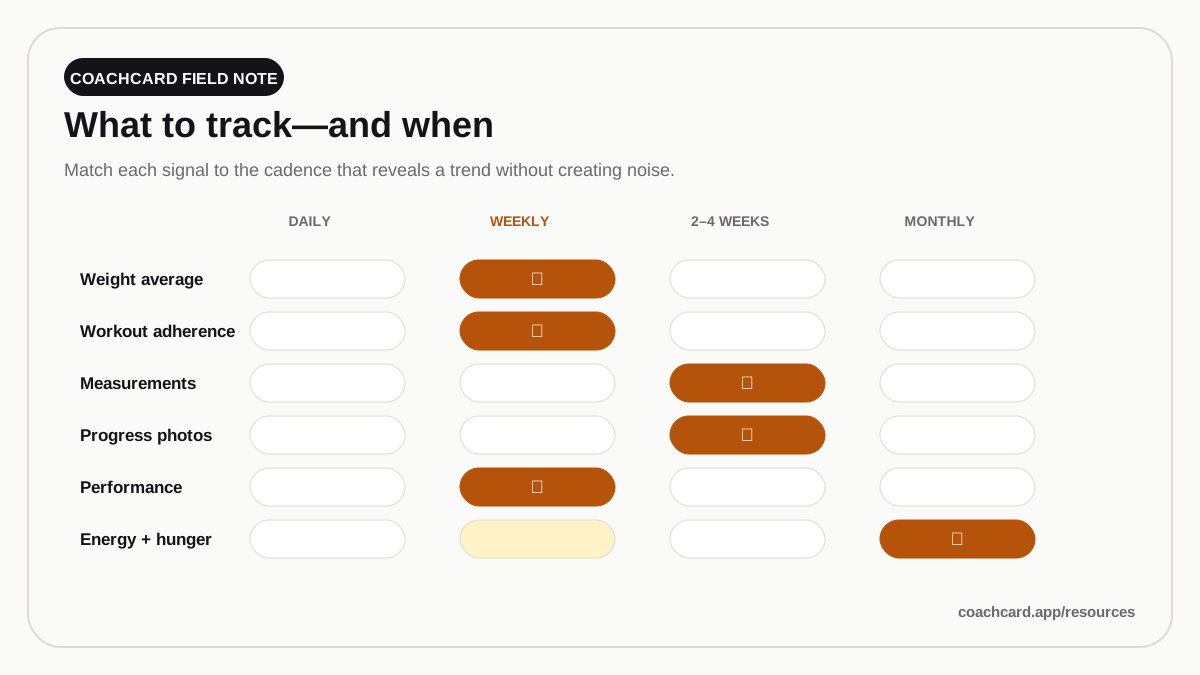
Daily
- Body weight (for weekly average calculation)
Weekly
- Body weight average
- Workout adherence
- Subjective metrics (energy, hunger)
- Check-in submission
Every 2-4 Weeks
- Body measurements
- Progress photos
Monthly
- Performance review (are lifts going up?)
- Deep-dive progress summary
Analyzing Progress: How to Spot Trends
Single data points are useless. Trends over 3-4 weeks tell the story.
Good Progress (Fat Loss Goal)
- Weight trending down 0.5-1% per week
- Waist trending down
- Adherence 80-90%
- Energy stable or improving
- Performance maintaining or improving
Good Progress (Muscle Gain Goal)
- Weight trending up 0.25-0.5% per week
- Measurements increasing in target areas
- Adherence 80-90%
- Performance improving consistently
Plateau (Time to Adjust)
- Weight/measurements flat for 3-4 weeks
- Adherence solid (80%+)
- No explanation (not a high-sodium week or hormonal fluctuation)
When to adjust: After 3-4 weeks of true plateau. Not after 1 week.
Red Flags (Need Immediate Attention)
- Weight dropping >2 lbs/week consistently (too aggressive)
- Energy crashing (overtraining or under-eating)
- Adherence <60% (behavior issue, not program issue)
- Injury or pain (modify programming immediately)
Showing Progress to Clients (The Retention Tool)
You see the progress in the data. The client doesn't — unless you show them.
Bad: Text Message Summary
"Weight's down 0.8 this week. Keep going."
Forgettable. No context. No visual proof.
Good: Visual Progress Report
A designed card with:
- Their key numbers (weight, measurements, adherence)
- A trend chart (last 4-8 weeks)
- Your personalized coaching note
- Professional format (shareable on Instagram)
Why this works:
- Professional = clients feel taken care of
- Visual = easier to understand than numbers
- Shareable = free marketing when they post it
Tools like CoachCard generate these in 60 seconds. Input the data, get a beautiful card, send it.
Great: Side-by-Side Before/After
At 8-12 weeks, show before/after photos side-by-side with progress stats overlaid.
This is the most powerful retention tool. Clients see the change they couldn't see in the mirror.
Handling Plateaus (Without Losing the Client)
Plateaus are normal. Your response determines whether the client quits or sticks around.
Why Plateaus Happen
- Body adapting: Hormonal adjustment, water retention while repairing muscle
- Adherence slip: Client thinks they're tracking accurately, but they're not
- Calorie creep: Portion sizes slowly increasing without noticing
- Training adaptation: Body is more efficient, burning fewer calories
- Stress/sleep: Recovery issues stalling progress
How to Reframe a Plateau (Without Panicking)
Week 1-2 of plateau: "Weight's flat this week, which is totally normal. Your body is adjusting. Look at your measurements — waist is still trending down. That's fat loss, even if the scale won't show it yet. Let's give it one more week."
Week 3-4 of plateau: "Okay, weight's been flat for 3 weeks and measurements are stable. Time to adjust. We'll drop calories by 100-150/day and add one cardio session. This should break the plateau within 2 weeks."
Key: Explain why, offer evidence it's not a disaster, set clear next step.
When to Adjust the Plan
Adjust if:
- Weight/measurements flat for 3-4 weeks
- Adherence is solid (80%+)
- Energy is stable (not crashing)
How to adjust (fat loss):
- Drop calories by 100-150/day
- Add 1-2 cardio sessions per week
- Increase training volume slightly
- Check for tracking errors first
How to adjust (muscle gain):
- Add 100-200 calories/day
- Increase training volume (more sets/reps)
- Check protein intake (1g per lb bodyweight minimum)
Long-Term Tracking (6-Month, 1-Year Reviews)
Clients forget where they started. Your job is to remind them.
6-Month Review
Pull up their intake questionnaire. Compare to now:
- "6 months ago you said you couldn't do 3 push-ups. Now you're doing 20."
- "6 months ago your goal was to lose 15 lbs. You're down 18."
- Show before/after photos side-by-side
This is a retention moment. Celebrate it.
1-Year Review
Big picture time:
- Total weight/measurement change
- Performance improvements
- Before/after photos (12 months apart)
- Reset goals for the next year
Why this matters: Clients who make it to 12 months usually stay for 24+. The 1-year mark is a psychological milestone.
Tools for Tracking
Spreadsheet (DIY)
✅ Free
✅ Fully customizable
❌ Manual data entry
❌ No visual output
Best for: <10 clients, tech-savvy coaches
Coaching App (Trainerize, TrueCoach, My PT Hub)
✅ Built-in tracking
✅ Automatic charts
✅ All-in-one (workouts + check-ins + tracking)
❌ $20-150/month
Best for: 20+ clients, want automation
Progress Report Tool (CoachCard)
✅ Turns data into visual reports
✅ 60 seconds per client
✅ Clients love it (shareable format)
❌ $19-39/month
Best for: Any coach who wants better retention
The Bottom Line
Progress tracking is not admin work. It's a retention tool.
Clients who see their progress stay 3x longer than clients who don't. Your job is to make progress visible, tangible, and impossible to ignore.
The system:
- Track the right metrics (weight, measurements, photos, adherence, performance)
- Analyze trends (not individual data points)
- Show clients the progress (visual reports, not text messages)
- Handle plateaus proactively (reframe, then adjust)
- Celebrate milestones (30 days, 90 days, 6 months, 1 year)
The coaches who retain clients at 80%+ aren't just tracking progress. They're making it feel real.
Make Progress Visible — Try CoachCard
Turn tracking data into beautiful, shareable progress reports in 60 seconds.